Sound familiar?London
- The call
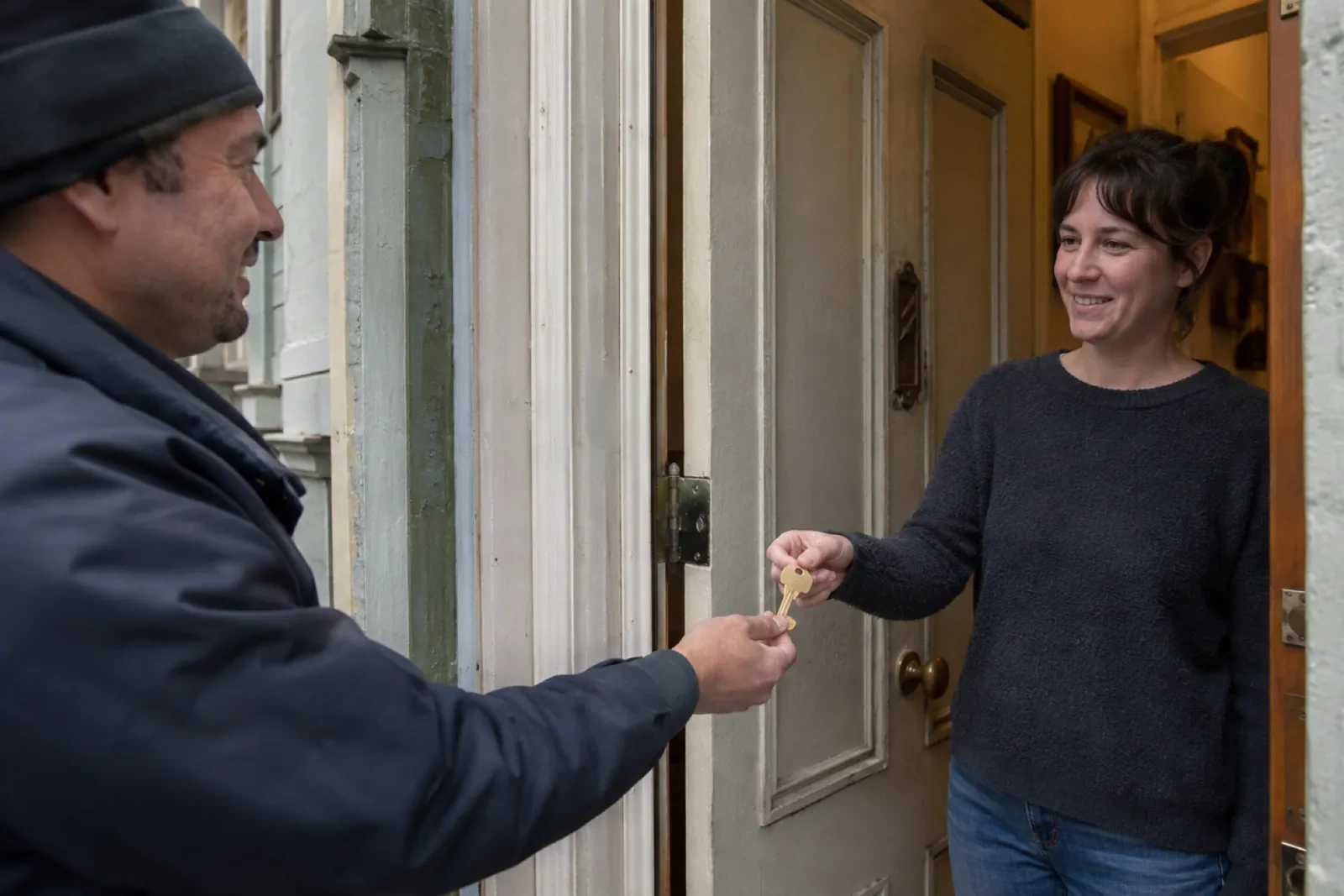
- The renovation wrapped up in the spring. The crew was good, the kitchen looks right, and the key you handed the foreman on day one was never handed back. Nobody kept track of who on the crew carried it.
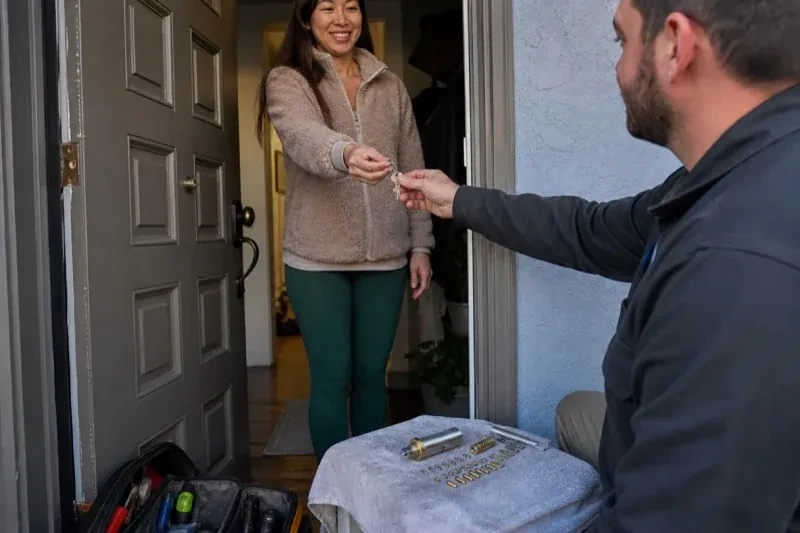
The keys fell out of a gym bag somewhere between the arena and the parking lot. The ring has a tag from the building with the unit number on it.
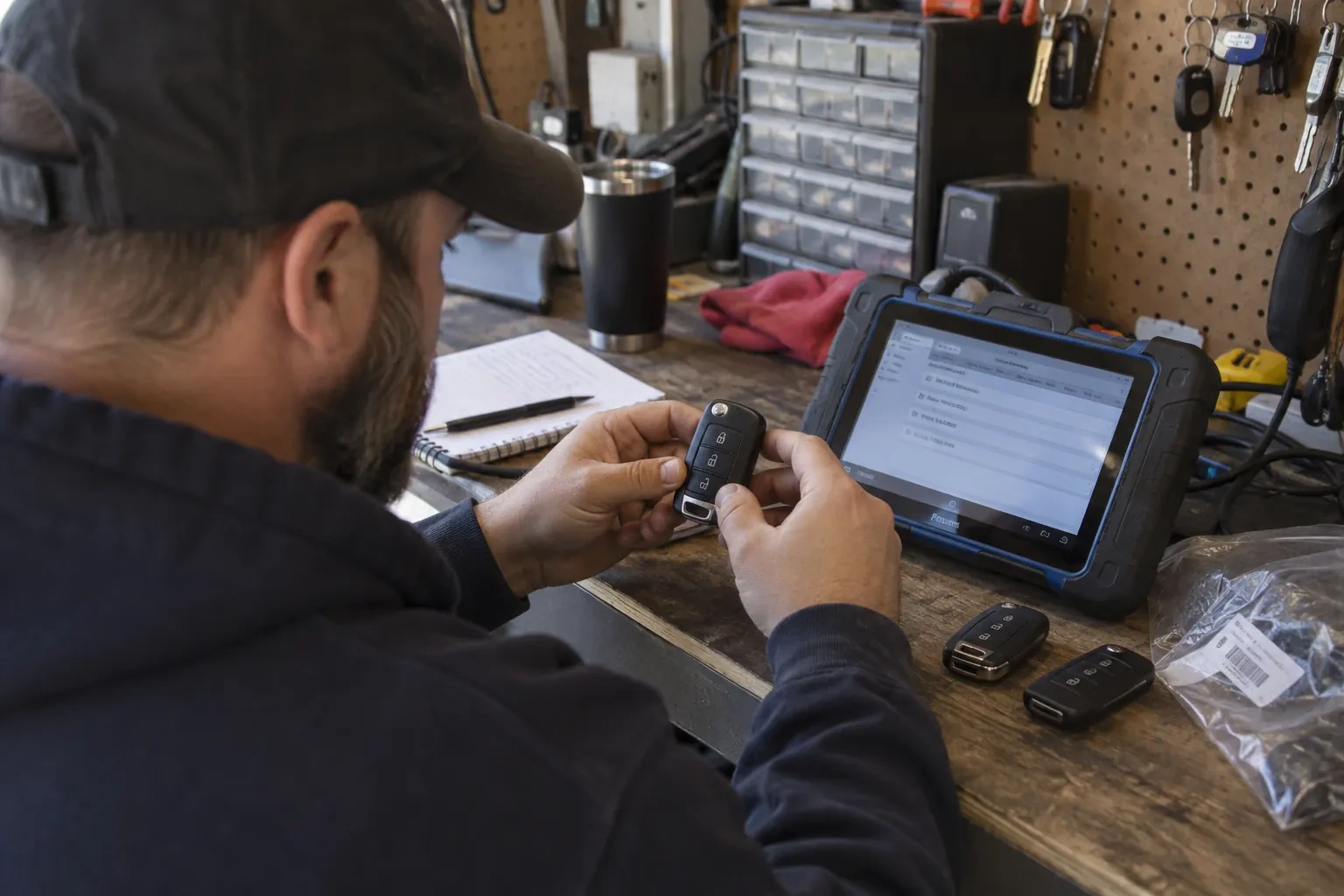
When a key disappears, cutting yourself another copy solves the wrong half of the problem. You can get in again, but so can whoever finds the original. A same-visit rekey turns that around: the locksmith works through each cylinder the missing key operated, fitting new bottom pins on a conventional lock or resetting a homeowner-rekeyable one through its own procedure, and refits the lock to the door. The lost key still slides into the keyway but no longer lifts the pins to the right height, so it turns nothing. You leave with fresh keys cut on site and the same locks you already had.
Sound familiar?London
Lost Keys — Same-Visit Rekey · London
Scene 1
Rekeying suits hardware in sound condition, and most cylinders on a house qualify. The locksmith flags the exceptions while the list is being made: a plug worn oval by decades of use, a cylinder packed with salt and grit from a side door that faces the driveway, a knob lock so light it offers little resistance, or a keyway that no longer has blanks available. For those, a replacement cylinder or a complete new deadbolt keyed to match the rest is proposed as its own item, so you decide door by door. The aim is that every cylinder leaving the visit on a new key is one that will keep turning well for years.
Scene 2
Each cylinder comes off in the way its lock allows, and the door itself is never cut or drilled. A knob or lever lock releases its cylinder once the knob is slipped off its spindle and a retaining clip or cap is eased back. A deadbolt cylinder comes out when the interior thumb-turn assembly is unscrewed and the housing lifts away. A mortise cylinder in an older door backs out after its small set screw is loosened, and a rim cylinder on a night latch unscrews from its back plate. Each piece is set aside with its own screws so the door goes back together exactly as it was.
Scene 3
A rekey is the natural moment to decide where the spare goes, because the one under the planter is the reason many of these calls happen. A key with a trusted neighbour or nearby relative is the simplest answer. A small combination lockbox fixed in a discreet spot, with the code shared only with the people on your list, is a step up and can be fitted before the locksmith leaves. For families with a keypad lock, a personal code for each member does the same job without a key at all. Whichever you pick, the spare is now a planned thing with a known home rather than a habit.
What shapes the quoteCalamity Corners Locksmith Co.
FeesSame any hour
You can, and it solves being without a key. It leaves the lost one working, though, which is the half of the problem that keeps people awake. Rekeying takes about as much effort as a trip to a hardware store counter and ends with a new key in your hand and the old one retired. If the key was mislaid somewhere it will never be found and named nothing, a plain copy is a fair choice.
They lead to the same result, a door that a different key opens, by different means. Changing the locks puts new hardware on the door. Rekeying keeps the deadbolt and handle you have and changes what is inside the cylinder, commonly the bottom pins on a conventional lock or a reset on a homeowner-rekeyable one, so a new key operates it and the old one turns nothing. For hardware in good condition, rekeying is the natural choice after a lost key because nothing about the door's look or fit changes.
Yes, and it is a step that protects you. A rekey changes who can open the door, so the locksmith confirms the person asking has the standing to decide: photo identification matched to the address for an owner, a lease or bill for a tenant, management records for a superintendent or property manager. Say on the phone what you have so the visit starts smoothly.
MiddlesexOntario
Lost Keys — Same-Visit Rekey · Lucan Biddulph, Middlesex Centre, Broughdale, Calamity Corners, Masonville, Orchard Park, Sherwood Forest, Stoneybrook, University Heights, White Hills, Northcrest
Every square is one home in a hundred.
On-site assessment
The keys fell out of a gym bag somewhere between the arena and the parking lot.
(226) 271-6061, open 24/7.
On-site assessment preferred · (226) 271-6061, open 24/7