Sound familiar?London
- The call
- After a wet summer the entry door sits lower in its frame. The lock works perfectly when the door is open, but with it shut you have to lift the handle and shoulder the door to get the deadbolt to throw.
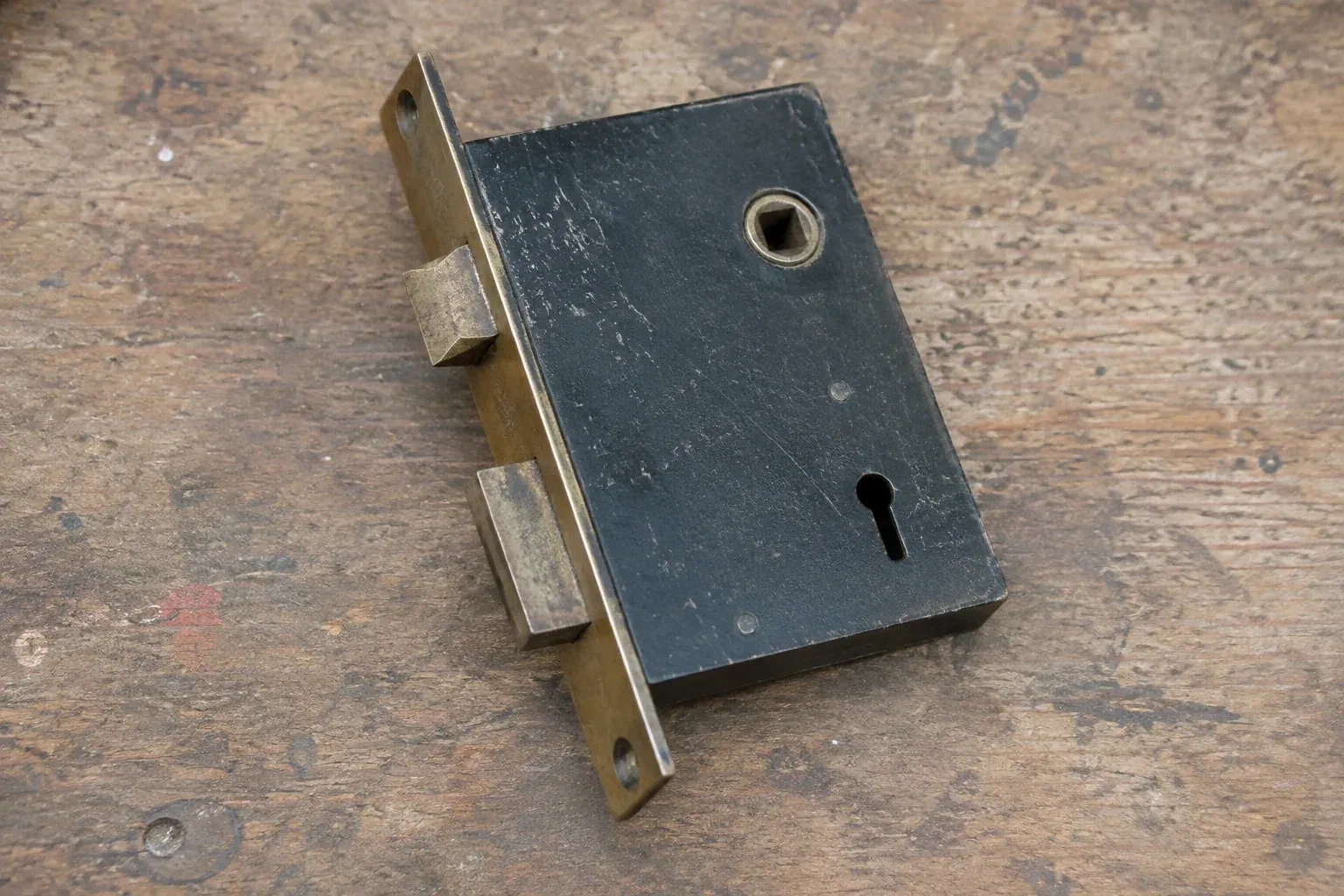
The brass knob on the front door of your century home turns, but nothing happens on the other side. The latch stays tucked in, the door swings free, and the only thing holding it shut is the deadbolt and a bit key that has worn down to a nub.
Most old mortise locks fail for boring reasons. A coil spring that has been compressed a hundred thousand times since the house was built finally breaks, or the grease inside the case dries into something like wax and the levers stick in it. Neither justifies cutting a new hole in a solid oak door. The service opens the case, cleans out the old lubricant, replaces the springs with the right size, matches any worn follower or lever and lubricates the mechanism lightly. The same case goes back into the same pocket, and the knob returns to level with the crisp snap it had decades ago.
Sound familiar?London
Vintage Mortise Lock Service · London
Scene 1
Before blaming a lock that may be perfectly sound, the locksmith looks at the door. With it open, the lock is cycled; with it closed, the latch and deadbolt are tried again. A lock that works open and fights when shut is telling you the door has moved. The gap around the door is checked top to bottom, the hinges are watched for a sag when the door is lifted, and the strike plate is inspected for bright wear marks where the bolt has been scraping past. In an older home with a solid wood door this is a routine finding, and correcting it is often most of the repair.
Scene 2
Springs are the usual culprits and the easiest fix. Broken coil and flat springs are matched from stock by length, wire gauge and shape, and fitted so the latch snaps out and the knob returns to level. A worn or cracked lever is matched from a donor case where one exists; where it does not, a replacement is filed from stock to the original's profile, which is slow, careful bench work rather than magic. A rounded hub is replaced or bushed. When every part moves as it should, the case is closed and cycled by hand with the cover on until the action is smooth and even in both directions.
Scene 3
The brass or bronze knobs and escutcheons on an old door have earned their patina, left alone unless you ask otherwise. Paint cleaned from a faceplate or strike leaves the bare metal as found, not polished bright. If you would rather see them shine, check the finish first: unlacquered brass takes a gentle polish well, kept off the keyhole and spindle; polishing a lacquered piece can scratch through it and start tarnish underneath. Lacquered reproduction parts resist tarnishing rather than darken to match; an unlacquered reproduction is built to age and blend in over a season or two. A light wipe when dusting is all the upkeep the trim needs; wet cleaners find their way into the case.
What shapes the quoteCalamity Corners Locksmith Co.
FeesSame any hour
A single entry lock that needs cleaning, springs and a strike adjustment is generally done in one visit of an hour or two. Filing a bit key adds bench time, and a set of interior latches is longer simply because there are more of them. A case that needs a part fabricated, or a replacement case that has to be ordered to size, may mean a second visit; the locksmith says so at the assessment.
Usually yes to the first, and to the second once the locksmith checks the locks. Interior mortise latches with privacy turn buttons are lighter versions of the entry lock and respond to the same clean and re-spring. Interior locks in a house were sometimes supplied to one bit key, and where the key sections, warding and levers actually match, the locksmith can restore that arrangement so a single key opens several bedroom and bathroom doors. It is a practical thing to have when a child locks a bathroom from inside.
Often, on cases that already take a threaded cylinder. Mortise cylinders are made in standard thread sizes and lengths with different cam shapes, and a new one is selected to match the case and the door thickness. That gives you keys cut on a machine and the option of keying the door alike with the rest of the house. A bit-key case has no cylinder to swap; its keys are made on the bench instead.
MiddlesexOntario
Vintage Mortise Lock Service · Lucan Biddulph, Middlesex Centre, Broughdale, Calamity Corners, Masonville, Orchard Park, Sherwood Forest, Stoneybrook, University Heights, White Hills, Northcrest
Every square is one home in a hundred.
On-site assessment
The brass knob on the front door of your century home turns, but nothing happens on the other side.
(226) 271-6061, open 24/7.
On-site assessment preferred · (226) 271-6061, open 24/7