Sound familiar?Middlesex Centre
- The call
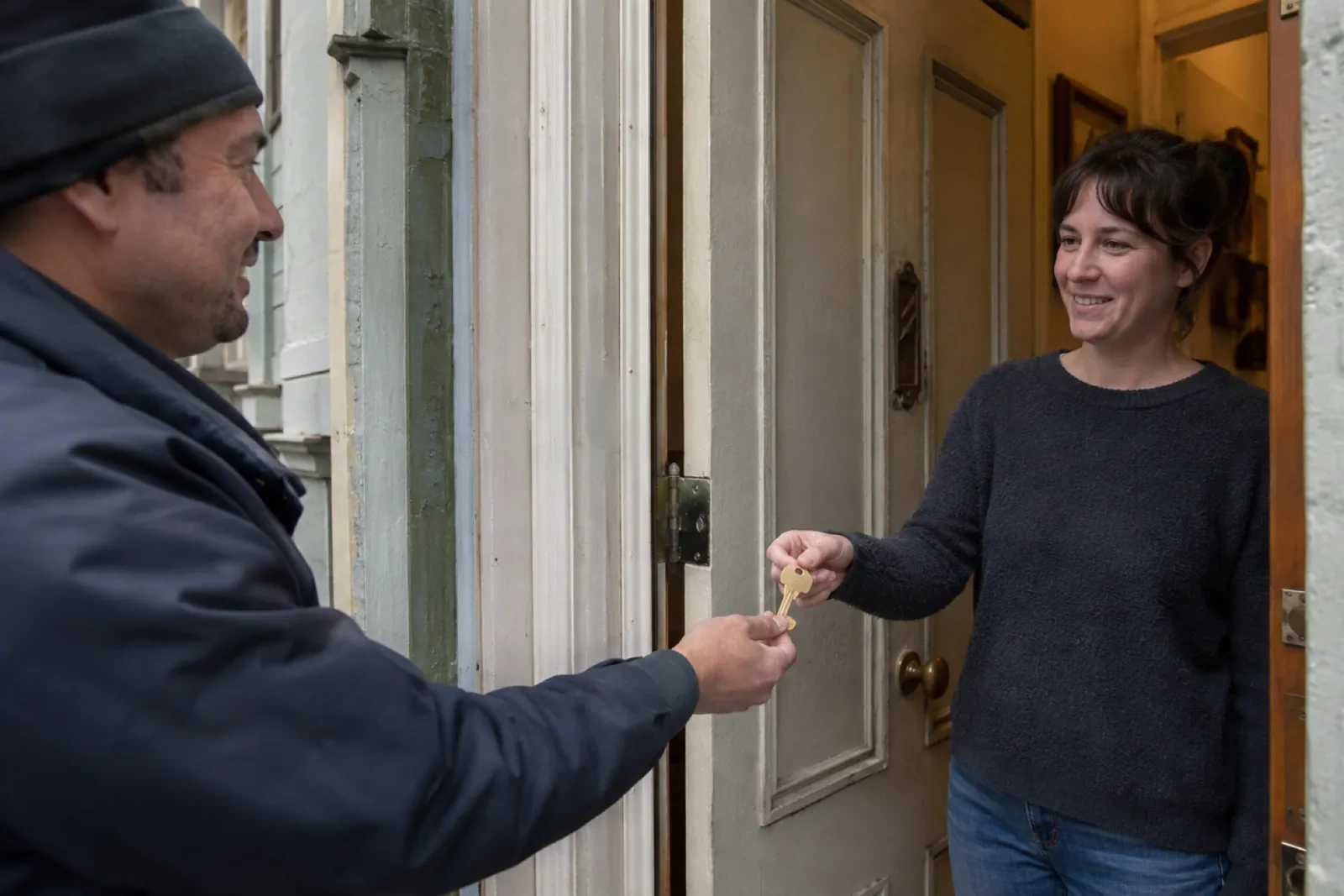
- It is the coldest morning of the winter and the key goes halfway into the side door and stops. There is frost on the face of the cylinder, and the door on the shaded side of the house has done this before.
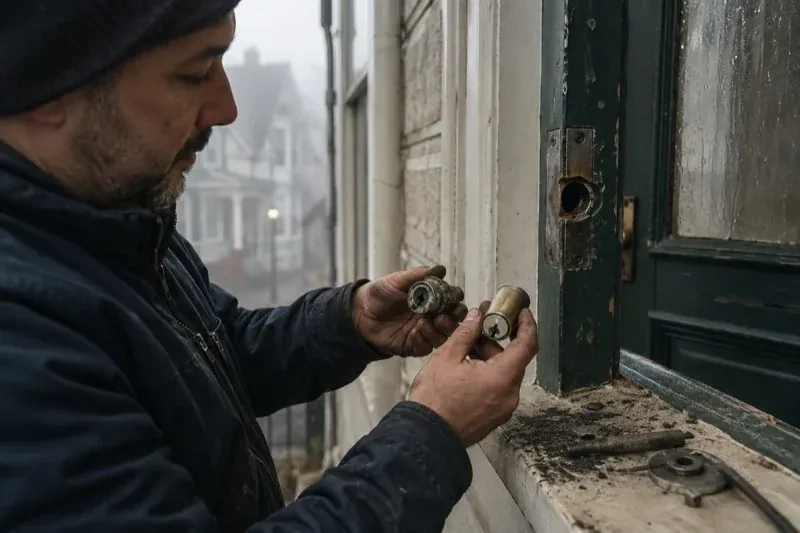
The lock works, but only if you lean on the door with your hip while turning the key. After a week of humid weather the bolt is jammed against the strike plate, and without that push the key stops halfway.
On storefronts, offices and older houses the hardware is often a mortise lock with a lever, and the jam is frequently inside the case, not the cylinder. A lever that swings without retracting the latch can point to a broken spring, a worn hub, or another fault in the drive path; a key that stops halfway can point to a bent spindle, an old case packed with dust, or a problem in the cylinder itself. Seized and jammed lock opening for this hardware means getting people through the door, then opening the case, cleaning the contact points, and fitting the part that gave up.
Sound familiar?Middlesex Centre
Seized & Jammed Lock Opening · Middlesex Centre
Scene 1
A small mirror and a bright light show what the keyway has collected. Salt crust, sand, metal filings, sawdust from a renovation and the gummy residue of household spray oils are all common, and each reads differently: a dry gritty feel, a sticky drag, or a plug that will not accept the key to full depth. Ice shows as frost on the cylinder face and a key that stops short. A cylinder cap that has loosened lets the plug sit crooked so the pins never line up. This look decides whether the cylinder needs a flush and dry lubricant, a thaw, a re-tightened cap, or a full strip on the bench.
Scene 2
A key that spins freely means the cylinder is fine and the bar behind it, the tailpiece or cam, has broken, slipped or twisted out of engagement. The bolt is then retracted directly through the mechanism rather than through the cylinder, or the cylinder is withdrawn so the locksmith can reach the bolt drive. Once the door is open the old tailpiece is removed and a replacement of the correct length and profile is fitted, since one that is too short repeats the fault and one that is too long binds. The cylinder goes back, the retaining screws are checked, and the bolt is thrown and retracted with the key until it moves cleanly through its full travel.
Scene 3
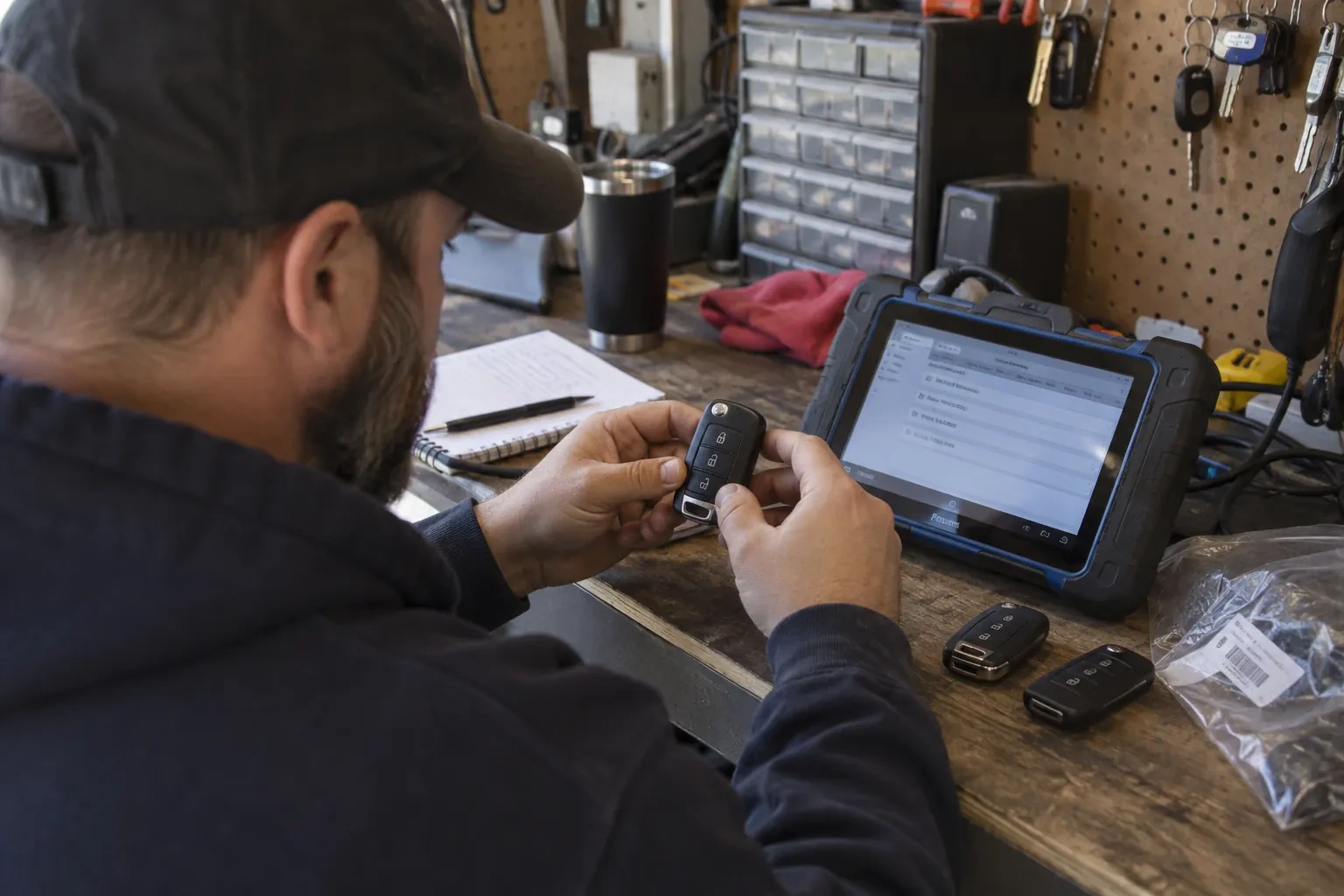
A serviced cylinder stays that way with very little effort. At the interval and with the product that cylinder's maker specifies, a short burst of lock lubricant into the keyway followed by a few turns of the key is enough; stay with that one product, since mixing lubricants makes a paste. Household oils, penetrating sprays and silicone meant for hinges belong nowhere near the pins, because they thicken and attract grit. Wipe the key before it goes in on a muddy or salty day. If the lock ever starts to drag, a puff of lubricant is the first response, and a call is the second.
What shapes the quoteCalamity Corners Locksmith Co.
FeesSame any hour
Possibly, if the key was part of the cause. A worn or bent key lifts the pins short of the shear line, so the plug binds even in a healthy cylinder, and a copy made from that key repeats the wear. A key cut from the code or from a crisp original is the fix. If the lock was also gritty or the door had moved, the new key would have eased things without settling them, which is why the locksmith checks all three.
Three habits cover most of it. Lubricate the cylinder with a dry lock product twice a year and keep oils out of it. Check that the door locks with no pressure on it each spring and fall, snugging hinge and strike screws when it starts to drag. Keep a lock de-icer handy and fit a keyhole cover on exposed doors. And act on the first stiff turn, because a lock that still turns is a smaller job than one that has stopped.
Yes, with one difference. On an electronic deadbolt the motor is trying to throw a bolt that is bound in the strike, and it strains or times out instead of driving it. Door alignment is a common cause, though batteries, corrosion, an overtightened mounting bolt, or a hardware fault can produce the same strain. The locksmith frees the bolt, adjusts the strike or hinges so it travels without resistance, checks the battery contacts, and confirms the auto-lock throws cleanly with the door closed.
MiddlesexOntario
Seized & Jammed Lock Opening · London, Lucan Biddulph, Broughdale, Calamity Corners, Masonville, Orchard Park, Sherwood Forest, Stoneybrook, University Heights, White Hills, Northcrest
Every square is one home in a hundred.
On-site assessment
The lock works, but only if you lean on the door with your hip while turning the key.
(226) 271-6061, open 24/7.
On-site assessment preferred · (226) 271-6061, open 24/7